
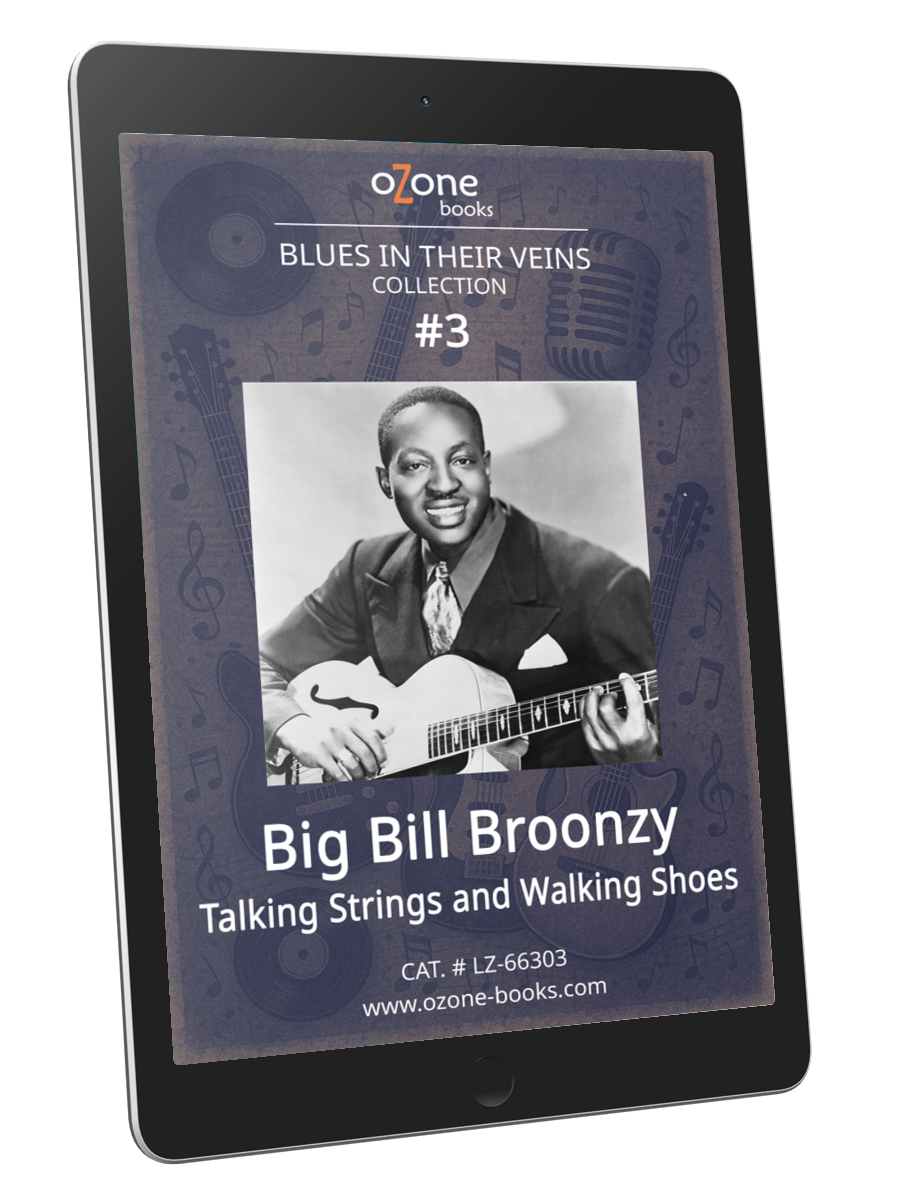
Big Bill Broonzy
Talking Strings and Walking Shoes
€6.40
DOWNLOADABLE E-BOOK
Immediately available to your e-mail
Big Bill Broonzy was never just one thing. He was a bluesman, a folk singer, a raconteur, a cultural ambassador, and a guitarist who could make six strings sound like a conversation. He played before microphones were common and kept playing long after the world turned electric. He sang in juke joints, on European stages, and in university lecture halls with the same calm wit and steady rhythm that made his music impossible to ignore and even harder to imitate.
This engaging and irreverent literary portrait follows Broonzy’s winding path from the cotton fields of the South to the cafés of Paris, from sideman sessions in smoky Chicago clubs to solo turns on the folk revival circuit. It’s not just a story of dates and discography, but of style, voice, and presence – the kind of legacy that doesn’t always get loud but never quite fades. Through twenty lively, sharp-edged chapters, the book traces Broonzy’s evolution across race records, swing, hokum, protest songs, and postwar folk. Each chapter digs into a different moment or aspect of his life with playful insight and a tone that honors Broonzy’s own unsentimental, good-humored approach to the world.
Also included is a robust appendix featuring a curated discography, timeline, key collaborations, and an in-depth look at Broonzy’s gear and technique – complete with honest observations on both his strengths and limitations as a performer. Quoted lyrics from his most memorable songs showcase his ability to tell the truth with economy and charm, and a selection of sources guides readers toward deeper exploration.
More than just a blues biography, this is a celebration of a man who made the genre his own without ever claiming to own it. Whether you're a musician, a fan of American roots music, or simply someone who appreciates a well-told life lived in tune, this book offers a fresh, unpretentious take on one of the most quietly influential artists of the 20th century. It’s not a eulogy. It’s an encore.