
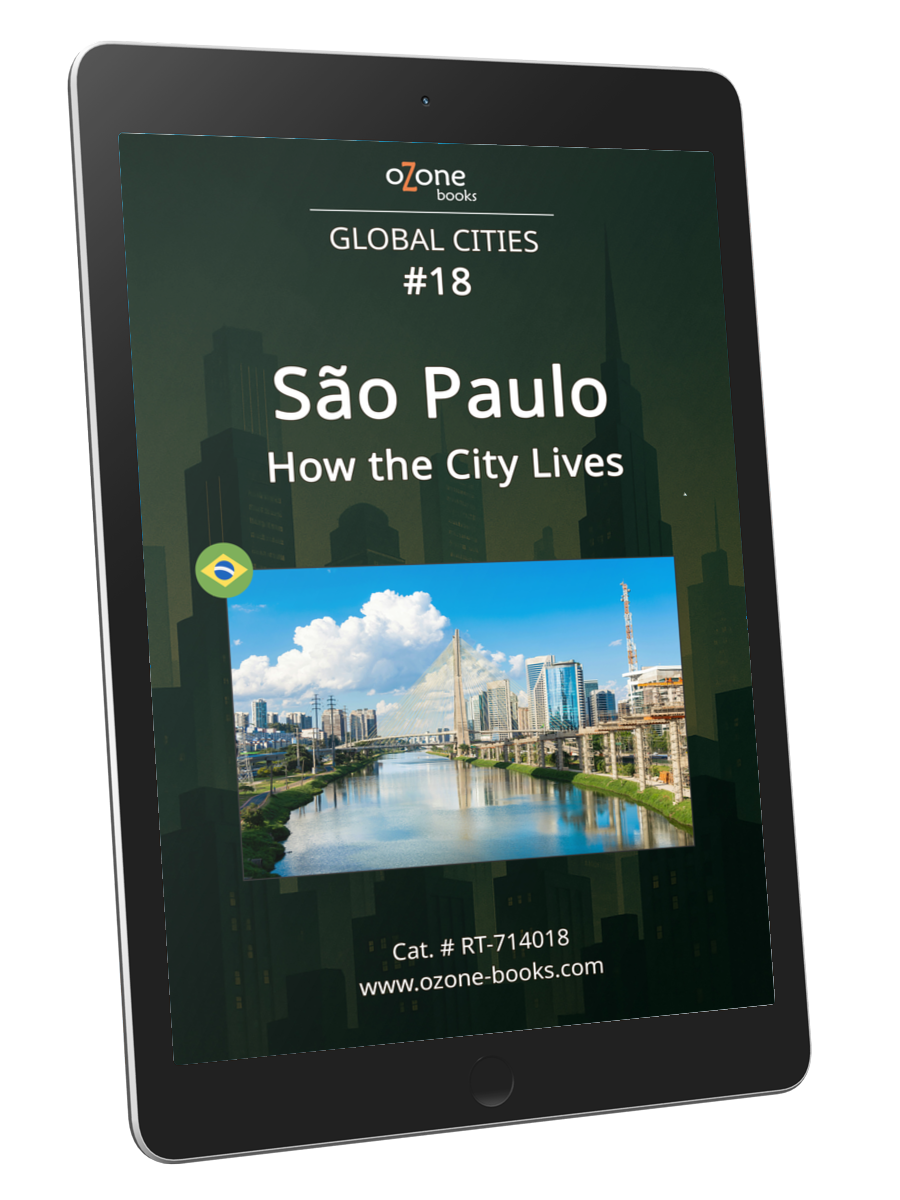
São Paulo: How the City Lives
€5.20
DOWNLOADABLE E-BOOK
Immediately available to your e-mail
Global Cities: How the World Really Lives is not your average travel series. These aren’t guidebooks or history lessons – they’re immersive portraits of the world’s great cities told with curiosity, wit, and insider soul. Think cultural deep dives with street-level detail, big ideas, and better jokes. Come for the urban anthropology, stay for the coxinha.
Global Cities: São Paulo is a 360-degree joyride through the engine room of Brazil – gritty, vast, misunderstood, and thrillingly alive. Part investigative stroll, part cultural excavation, this book dives into the concrete jungle with the wide-eyed charm of Bill Bryson and the nuance of someone who’s been stuck on the Marginal Tietê for hours and learned to love it anyway.
Here you’ll meet the architecture that made brutalism beautiful, the underground poets turning trauma into verse, the padaria that doubles as neighborhood parliament, and the church service that feels more like a TED Talk on divine ROI. You’ll find out why São Paulo is the best food city you didn’t see coming, how the Japanese-Brazilian community reshaped entire districts, and why resistance and reinvention are as essential here as rice and beans.
With chapters that trace the city's backstory – from vanished rivers and coffee-fueled capitalism to LGBTQ+ ballroom scenes and helicopter commutes – this is São Paulo in all its contradictory glory: chaotic, dazzling, heavy, light, concrete, and heartbreakingly human.
Whether you’re planning a trip, relocating, studying cities, or just addicted to understanding how people actually live, Global Cities: São Paulo delivers the context, color, and character that turn a destination into a story. No listicles. No clichés. Just a vivid, funny, and soulfully detailed portrait of one of the most misunderstood megacities on the planet.
This is not about where to take a selfie. It’s about why you’re standing there in the first place – and who had to move to make space for your view.